Troubleshooting guides
Every guide follows the same order: measure, rule out your own network, then decide whether a paid tool is the right answer — including when it is not.
Ping and latency
-
High ping in Valorant: is it you, your ISP or the server region?
A step-by-step way to tell an unstable local connection apart from a distant server region. Use free tools first, paid ones only when the evidence supports it.
-
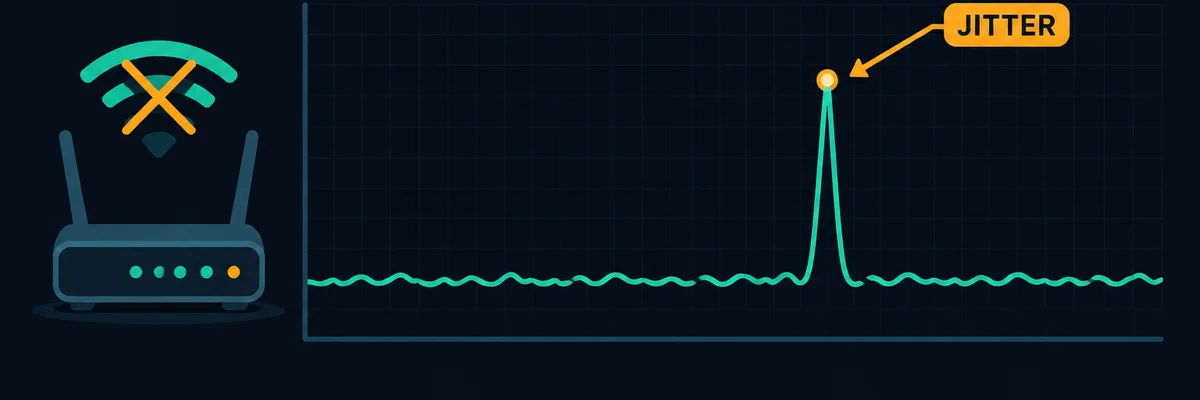
Fortnite ping spikes: why the number jumps and how to fix it
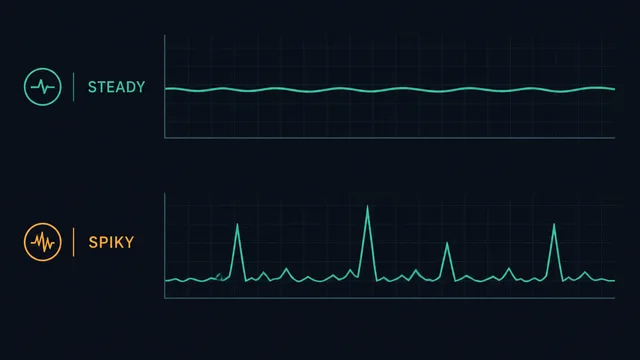
Ping spikes need a different fix from a high-but-steady ping. Here is how to tell them apart and what to check in order.
-
Apex Legends high ping: region choice beats almost everything else
Apex lets you pick a data centre, which makes it the best game to test whether your problem is the region or the connection.
-
World of Warcraft high ping: realms, layers and what you control
WoW ping depends on your realm, the layer you are in and the route to that data centre. Here is how to tell which one is the problem.
-
AION 2 high ping: server regions and the 200 ms problem
Playing a Korean MMO from outside the region is a distance problem first, a routing problem second. Here is how to tell them apart.
-
High ping in games but a fast speed test: why the two numbers disagree
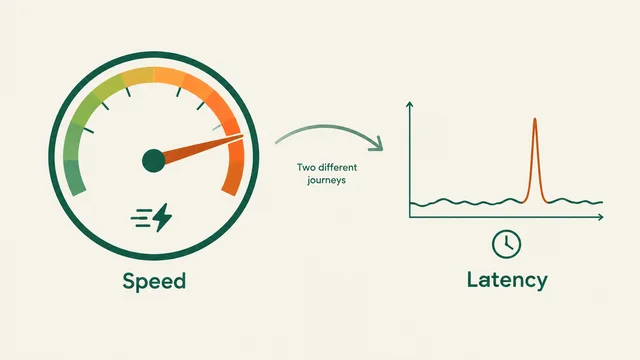
A 900 Mbps line can still be terrible for gaming. Speed and latency are measured against different things, and only one of them describes a match.
-
Ping spikes only in the evening: what is happening on your line
Evening latency is not random. It is either congestion in your own home, congestion in your neighbourhood, or the route your provider takes at peak hours.
-
Roblox high ping: find the server you are actually on
Roblox picks a server for you. Your ping depends on where that server is. Here is how to check it, and what you can change.
-
League of Legends high ping: regions, routing and Riot's side
LoL ping depends on your server region and the route your ISP takes. Here is how to tell which one is costing you.




Packet loss and desync
-
Marvel Rivals packet loss: fix rubber-banding fast
Rubber-banding is usually a lost-packet problem. The cause is usually local. Here is the order to check things in, and how to prove where the loss is.
-
Call of Duty lag and packet loss: checks that matter
CoD mixes regional matchmaking, relay servers and a busy netcode. Here is how to tell if your lag is local, regional or on the server.
-
Escape from Tarkov desync: network loss or server load?
Tarkov desync has two very different causes. This guide shows how to find out which one is hitting you before spending money.
-
Diablo IV lag and rubber-banding: fix high ping and packet loss
Rubber-banding in Diablo IV is usually packet loss on your side. Here is how to confirm it in a few minutes.
-
Valheim lag and desync on a dedicated server: find the cause
Valheim lag is usually the server host connection, not the game. Here is how to find out whose link is the problem.
-
Packet loss in only one game: what it tells you
Loss in one game and nowhere else is a clue, not a contradiction. Read it before you spend money.
-
CS2 high ping and packet loss: settings that actually matter
CS2 gives you a matchmaking ping limit and a telemetry overlay. Use both to tell if you should fix your setup or your region.


Consoles and mobile

-
PUBG Mobile high ping: what mobile players can control
Mobile has fewer knobs than PC. But the ones that exist matter more. A short, honest checklist for PUBG Mobile latency.
-
Lower ping on Xbox: fixes you can do tonight
Consoles give you fewer options than a PC. But the ones that matter are the same, plus one console-specific trick with a router.
-
How to lower ping on Wi-Fi: settings that matter
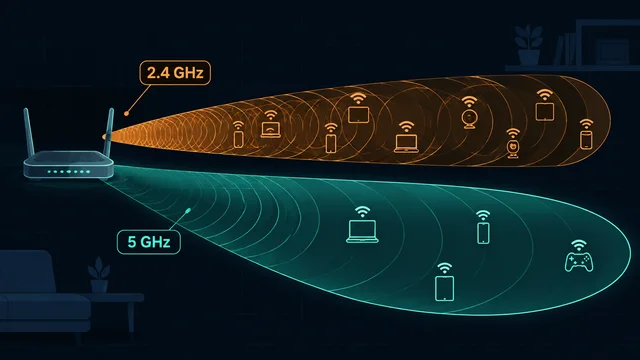
Wi-Fi is not automatically bad for gaming. A band choice, a channel and one cable move more than any "optimiser" app.
-
How to lower ping on PS5: console settings and a router trick
You cannot install a latency tool on a PS5. That makes the free checks more important — plus the one hardware option that exists.



Myths and buying advice
-
How to judge a latency tool before you buy one
A checklist for evaluating game boosters and route optimisers: what they can fix, what they cannot, what to test during the trial, and the marketing claims that should make you close the tab.
-
Wired vs Wi-Fi for gaming: is the cable worth it?
The cable is not always the answer. But it is always the cheapest test. Here is what changes and what stays the same.
-
Does changing DNS reduce ping? No — here's what actually does
Google DNS, Cloudflare DNS and "gaming DNS" are sold as latency fixes. Here is what DNS does, what it cannot do, and what to look at instead.
-
Does QoS reduce ping? What it fixes and what it can't
QoS is the most over-promised and under-explained setting on a home router. Here is what it does for latency, and the one number you must set correctly.
-
Are game boosters safe? Bans, overlays and what they touch
A straight answer on ban risk, what a route optimiser does on your machine, and the questions worth asking before installing anything.
-
Does a VPN lower your ping? Usually not — here is when it can
A VPN adds a hop, so the honest default answer is no. But there are narrow cases where a different path beats your provider default route.